NEURODIVERSITY IN EDUCATION
Neurodiversity support that makes sense in real life.
BEYOND LABELS, POLICIES AND THEORY
When we understand what may be happening, we can respond differently.
From organisation-wide awareness sessions and workplace neurodiversity training to tailored team development, practical consultancy and longer-term strategic partnership, Diversity Does helps organisations turn neurodiversity understanding into everyday practice.
Begin with the support that will create the greatest value now — and build from there as your organisation’s needs and ambitions develop.
Explore how Maisie can work with your setting:
HOW MAISIE CAN HELP
Start with the part of education
you want to work better
Support can be shaped around your people, your setting and what is happening in real life — not lifted from a standard training menu.
Support for educational teams
Help the people supporting others to feel supported too.
Training and development for leaders, whole organisations and specialist teams who want to understand neurodiversity more confidently — and turn that understanding into everyday practice.
This could include leadership teams, school business professionals, HR and People teams, teaching teams, pastoral staff or organisation-wide learning.
Support for student success
Look beneath behaviour, engagement
and learning
Practical learning for teaching and non-teaching staff who want to understand what may be happening beneath a student’s behaviour — and respond with greater curiosity, clarity and confidence.
Together, we can explore communication, executive functioning, cognitive load, regulation, overwhelm and the small changes that can make learning feel more accessible.
Apprenticeships & work placements
Create a better bridge between education and employment.
Support for employers, apprenticeship providers and education teams helping neurodivergent young people move into the workplace.
Maisie helps the people on both sides understand what may change during that transition — from recruitment and onboarding to workplace expectations, communication and reasonable adjustments.
EXPERIENCE ACROSS EDUCATION
From one leadership conversation to
organisation-wide learning.
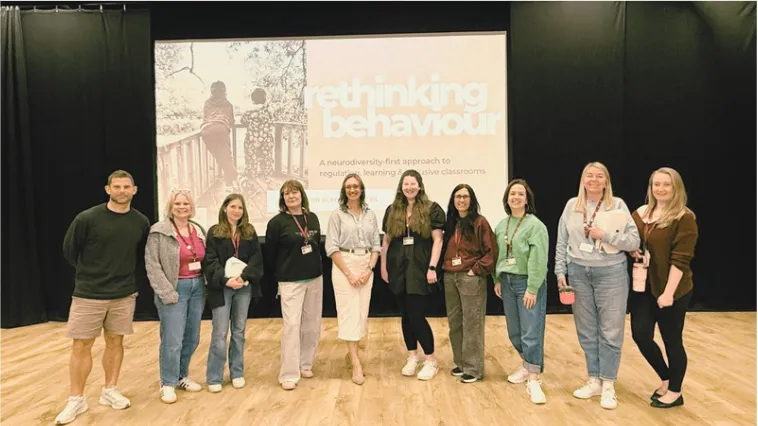
Whether Maisie is working with a leadership team, training more than 600 education professionals, speaking with school business managers or helping an employer prepare for neurodivergent apprentices, the aim is the same: to make neurodiversity easier to understand and practical support easier to put into place.
Sessions are warm, relatable and shaped around the people in the room. There is space for honesty, questions and those all-important:
“Ohhh… that makes sense” moments.
WHAT CHANGES?
Understanding is only useful when it changes what people experience.
UNDERSTAND WHAT YOU ARE SEEING
People begin to look beyond familiar assumptions and consider what may be happening beneath behaviour, communication or performance.
FEEL MORE CONFIDENT RESPONDING
Staff and managers leave with clearer language, better questions and practical ideas they can use in everyday situations.
REDUCE UNNECESSARY FRICTION
Small changes to expectations, conversations, environments and processes can make it easier for more people to participate and succeed.
When ADHD in Girls Goes Unnoticed at School
Girls with ADHD going unnoticed and unsupported in the UK education system is a massive problem. Yet, with a little bit of understanding this doesn’t have to be the case. ...more
ADHD in Education
November 07, 2024•11 min read

LET’S START WITH YOUR SETTING
What would you like to make easier for your staff or students?
You do not need to arrive with a finished brief or know exactly which session you need.
Tell Maisie about your setting, the people involved and where things currently feel difficult. Together, you can explore a useful starting point — and shape the support from there.
No enormous training menu. No pressure to have all the answers. Just a useful first conversation about what could work.


© 2026 | Maisie Cass | Diversity Does
NEURODIVERSITY IN EDUCATION
Neurodiversity support that makes sense in real life.
NEURODIVERSITY IN EDUCATION
Neurodiversity support that makes sense in real life.
BEYOND LABELS, POLICIES AND THEORY
When we understand what may be happening, we can respond differently.
Neurodivergence can influence how someone learns, communicates, manages expectations, regulates, participates and responds to the world around them.
But those differences do not always look the way people expect — or fit neatly within diagnostic descriptions, support plans or familiar ideas about engagement and ability.
Maisie helps education professionals look beneath what they can see, understand where unnecessary friction may be occurring and identify what could make a practical difference.
Because when behaviour makes more sense, conversations change. Support becomes more responsive. And more people have the opportunity to participate, progress and succeed.
Explore how Maisie can work with your setting:
HOW MAISIE CAN HELP
Start with the part of education you want to work better
Support can be shaped around your people, your setting and what is happening in real life — not lifted from a standard training menu.
Support for
educational teams
Help the people supporting others to feel supported too.
Training and development for leaders, whole organisations and specialist teams who want to understand neurodiversity more confidently — and turn that understanding into everyday practice.
This could include leadership teams, school business professionals, HR and People teams, teaching teams, pastoral staff or organisation-wide learning.
Possible focus areas:
Neurodiversity in real life
Neuroinclusive leadership
Supporting neurodivergent colleagues
More confident conversations about support
Reducing friction across working environments
Support for
student success
Look beneath behaviour, engagement and learning.
Practical learning for teaching and non-teaching staff who want to understand what may be happening beneath a student’s behaviour — and respond with greater curiosity, clarity and confidence.
Together, we can explore communication, executive functioning, cognitive load, regulation, overwhelm and the small changes that can make learning feel more accessible.
Possible focus areas:
Behaviour as communication
Executive functioning and cognitive load
Regulation, avoidance and overwhelm
Clearer expectations and communication
Practical, responsive student support
Apprenticeships
& work placements
Create a better bridge between education and employment.
Support for employers, apprenticeship providers and education teams helping neurodivergent young people move into the workplace.
Maisie helps the people on both sides understand what may change during that transition — from recruitment and onboarding to workplace expectations, communication and reasonable adjustments.
Possible focus areas:
Preparing managers and placement supervisors
Inclusive recruitment and onboarding
Clear workplace communication
Adjustment conversations
Helping young people understand and communicate what supports them
EXPERIENCE ACROSS EDUCATION
From one leadership conversation to organisation-wide learning.
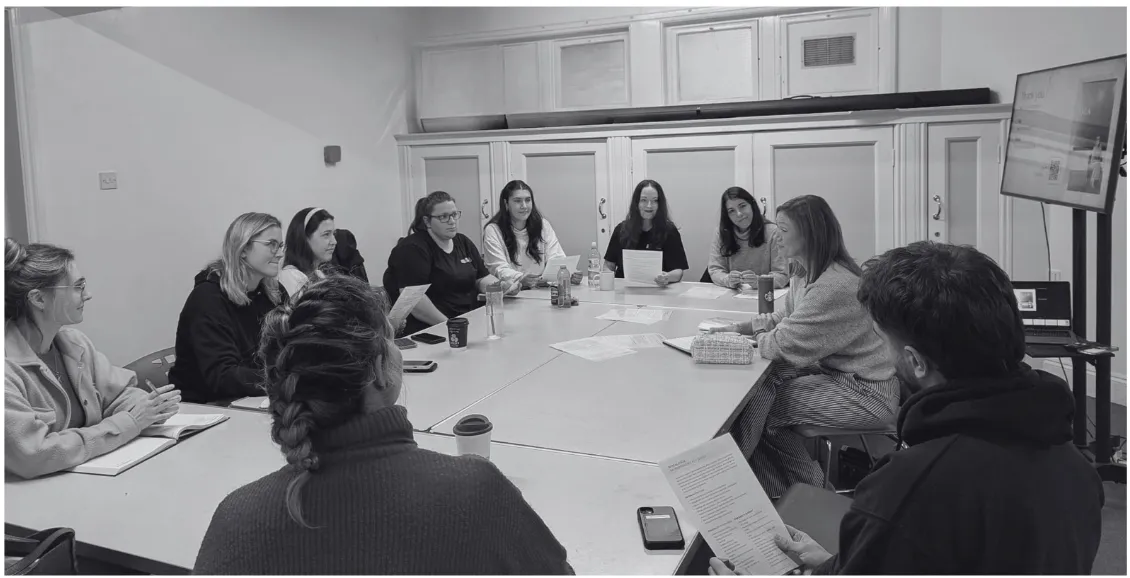
Whether Maisie is working with a leadership team, training more than 600 education professionals, speaking with school business managers or helping an employer prepare for neurodivergent apprentices, the aim is the same: to make neurodiversity easier to understand and practical support easier to put into place.
Sessions are warm, relatable and shaped around the people in the room. There is space for honesty, questions and those all-important:
“Ohhh… that makes sense” moments.
WHAT CHANGES?
Understanding is only useful when it changes what people experience.
UNDERSTAND WHAT YOU ARE SEEING
People begin to look beyond familiar assumptions and consider what may be happening beneath behaviour, communication or performance.
FEEL MORE CONFIDENT RESPONDING
Staff and managers leave with clearer language, better questions and practical ideas they can use in everyday situations.
REDUCE UNNECESSARY FRICTION
Small changes to expectations, conversations, environments and processes can make it easier for more people to participate and succeed.
FROM THE DIVERSITY INSIGHTS BLOG
More ways to think about neurodiversity in education.
Explore practical ideas and different perspectives on neurodivergent learning, working, communication and wellbeing — and how greater understanding can lead to more responsive support.
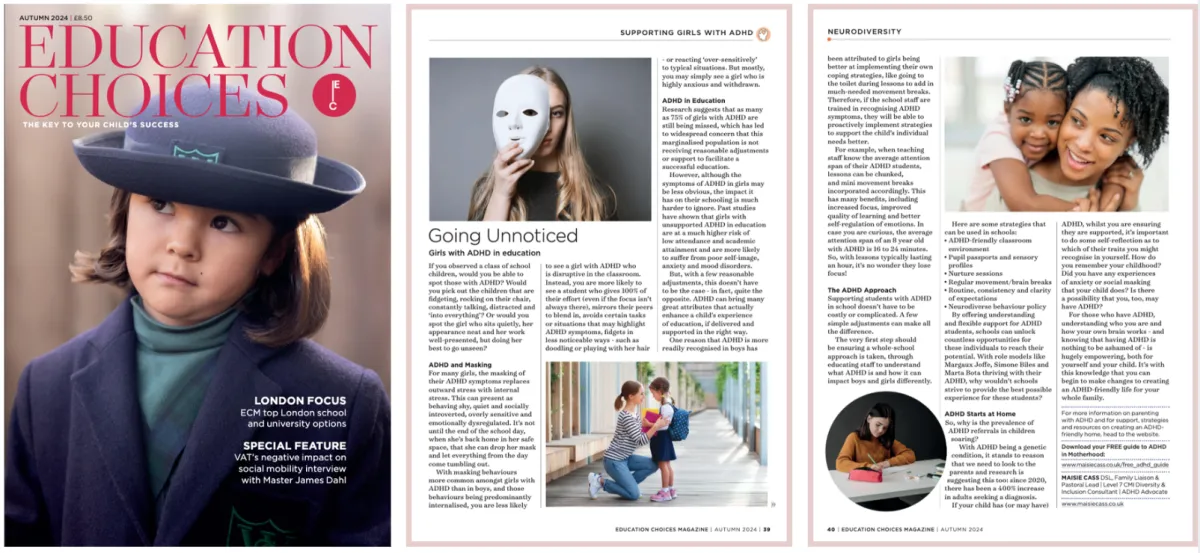
When ADHD in Girls Goes Unnoticed at School
Girls with ADHD do not always look the way people expect — so what might be happening beneath the quietness, coping or apparently perfect work?

SEND Reform: FE's Role with Neurodivergent Learners
As SEND reform continues, further education must be recognised as a vital bridge between school and adulthood — not treated as an afterthought in the support surrounding neurodivergent young people.

Neurodivergent Apprentices:
Building a Better Bridge into the Workplace
Apprenticeships can offer a powerful route into employment — but only when inclusion is designed into both the learning experience and the workplace from the beginning.
LET’S START WITH YOUR SETTING
What would you like to make easier for your staff or students?
You do not need to arrive with a finished brief or know exactly which session you need.
Tell Maisie about your setting, the people involved and where things currently feel difficult. Together, you can explore a useful starting point — and shape the support from there.
No enormous training menu. No pressure to have all the answers.
Just a useful first conversation about what could work.